Showing posts with label hypocrites. Show all posts

Thursday, July 05, 2007

Tom Watson - Two names and two faces

Labour's performance in the by-election in Ealing Southall is generating more and more nastiness. First we get the farce of an All Women Shortlist being imposed on the constituency, then retracted following a strong campaign against it. Cue outrage from the AWS advocates. (Antonia Bance: Ealing Southall) Then the shortlist that was put to the membership did not meet the hopes of those who sought to overturn the AWS in the first place. Cue outrage. (SikhSangat News: Labour Party Sikh Members Not Impressed By Labour Selection Process For Ealing Southall) It seems as though whoever in the Labour Party is responsible for overseeing the selection has decided that when it's not possible to please everyone the key priority is to outrage everyone.

Then we get the farce of Tom Watson MP claiming the Conservative candidate is not a registered voter. This is because he didn't bother to look properly. Under changes to electoral law made by Tom Watson's government, candidates are entitled to stand under their best known name rather than their full formal name. You would have thought that the person in charge of Labour's election campaign would know current electoral law!!! Clearly he also doesn't know the electoral law that it is illegal to publish false statements about candidates under electoral law. (Tom Watson MP: Who is Tony Lit? and also Iain Dale: EXCLUSIVE: Labour Breach Electoral Law in Ealing Southall)

Is this Tom Watson? Or is it Thomas Anthony Watson?Next Tom Watson dug his hole deeper by attacking Tony Lit for sometimes going by his full name (Surinderpal Singh Lit) and sometimes by his given name (Tony Lit). (Tom Watson MP: Who is Tony Lit? [2]) This from a man presenting himself to the world as "Tom Watson" when his full name is "Thomas Anthony Watson". Has he not noticed this?

And for the record I technically go by several variations of name. As well as using "Tim" as my first name, there is deep ambiguity over whether or not there is a hyphen in my surname - I use one but other members of my family don't. And as many internet registrations don't allow spaces and hyphens "timrollpickering" has almost become another name for me. I am sure many others do. Perhaps Tom aka Thomas Anthony Watson would like to spend more time getting his facts straight and less making gaffes.

Thursday, June 21, 2007

Pots and kettles

The Liberal Democrats have accused Gordon Brown of "dirty tricks" over his offer of a job to Paddy Ashdown. (BBC News: Lib Dem anger over Brown 'tricks')

Let me repeat that. The Liberal Democrats are accusing someone else of dirty tricks! Hello Mr Pot.

Oh and why did Brown ever think Ashdown was suitable to be Secretary of State for Northern Ireland? The man makes no secret of his hatred of "tribalism"!

Still he could swap stories with Sammy Wilson...

Sunday, May 06, 2007

Is Alex Salmond the new George W. Bush?

It may well look that way. The Scottish election had numerous problems and it now seems possible a legal challenge may be lodged. (BBC News: Labour may challenge Scots vote) In the constituency of Cunninghame North, Labour lost by just 48 votes, amidst numerous spoilt ballot papers. Defeated Labour MSP Allan Wilson may lodge a legal challenge.

I've just done the calculations (for those interested, the figures are at BBC News: Election Result: West of Scotland) and if the challenge is successful then it will totally reverse the numbers game in the Scottish Parliament. The top-up list seats in the West of Scotland region would remain the same - 4 SNP, 2 Conservatives, 1 Lib Dem (although the order of allocation would change slightly), so the effect would be to remove one seat from the overall SNP total and add it to the Labour total - giving Labour a one seat lead over the SNP (and also making some of the coalition numbers even tighter).

An SNP source ...described the potential action as "sour grapes".
On Thursday night the SNP were talking a lot about how damaging the voting problems had been. Now that those voting problems may have benefited them, they're labelling those who are seeking verification "sore losers". Why am I so reminded of Florida in 2000?

Wednesday, December 27, 2006

Livingstone vs Phillips round infinity

Ken Livingstone has attacked Trevor Phillips yet again. (BBC News: Mayor's fresh attack on Phillips) Yet again it stems from their differing views on the best way forward for equality.

Personally I find myself agreeing with Phillips the most. Multiculturalism seems to mean something different to everybody, but if policies pursued in it's name are driving communities apart and creating a divided nation then is it really helping?

A man who attacks people for media whorring and who routinely media whoresBut what really stands out is one of Livingstone's specific attacks:

"Trevor thinks he's doing his job as long as he's all over the media."
There is another politician in London whom that description fits far, far more.

Tuesday, July 11, 2006

Is this what it's all about?

Since Slugger O'Toole is seeking to build better relations with the blogosphere, I thought I'd write a post in response to their 'Bonefire of the vanities'... about the bonfires lit every 11th of July. But first I've been asked by a few, even by those who've studied British politics, if I can explain what the annual celebrations are about.

Perhaps the best starting point is with the reign of James VII & II. The seventeenth century saw ferocious struggles between King and Parliament, with assertions of popular sovereignty and the Divine Right of Kings flying backwards and forwards, whilst elsewhere states such as France were reaching the height of their power under absolutist monarchs. In the three kingdoms in the British Isles events came to a head with James's reign. Many were prepared to tolerate James's conversion to Roman Catholicism in the short term as he was already in his 50s when he ascended to the throne and his heir presumptive was married to William of Orange, one of the leading Protestant rulers of the day.

There was a strong element of anti-Roman Catholicism involved, but it would be wrong to see the events of 1688-1691 purely as a religious conflict. In the eighteenth century there was a lot of political hypocrisy - a rejection of Protestant dissenters from Anglicanism co-existed with an establish Presbyterian church in Scotland; distrust of foreigners co-existed with first a king who also ruled the Netherlands and later with successive kings who also ruled a leading state in Germany; and a staunch anti-Roman Catholicism co-existed with alliances with Austria (and sometimes conflict with Prussia). Maybe the anti-Roman Catholicism was really a code for Francophobia and Spanophobia.

In 1688 James had a son who seemed likely to continue the Roman Catholic reign and many of the controversial policies and a result matters came to a head. Although there was division between those who wished to replace James and those who merely wished to see his actions curtailed, soon many came together to invite William of Orange over to England with his armies. Landing on November 5th 1688, William soon garnered much support and after a series of minor skirmishes and desertions James eventually fled (throwing the Great Seal in the Thames) to France.

The following year the Convention Parliament deemed James's actions to be abdication. The throne of England was jointly offered to William and Mary, with succession to James's daughter Anne. James's son was disregarded and many a story circulated about him being smuggled into the palace in a bedpan.

Part of the settlement in England was the passing of the Bill of Rights which remains to this day one of the fundamental constitutional laws of the country. The Estates (Parliament) of Scotland passed the separate but similar Claim of Right. And for many the "Glorious Revolution" was all about what the Bill stands for.

The Bill of RightsWikipedia sums up the basic tenets of the Bill of Rights as follows:
*Englishmen, as embodied by Parliament, possessed certain immutable civil and political rights. These included:
**freedom from royal interference with the law (the Sovereign was forbidden to establish his own courts or to act as a judge himself)
**freedom from taxation by royal prerogative, without agreement by Parliament
**freedom to petition the King
**freedom from a peace-time standing army, without agreement by Parliament
**freedom [for Protestants] to have arms for defence, as allowed by law
**freedom to elect members of Parliament without interference from the Sovereign
**the freedom of speech in Parliament, in that proceedings in Parliament were not to be questioned in the courts or in any body outside Parliament itself (the basis of modern parliamentary privilege)
**freedom from cruel and unusual punishments, and excessive bail
**freedom from fines and forfeitures without trial
*Certain acts of James II were specifically named and declared illegal on this basis.
*The flight of James from England in the wake of the Glorious Revolution amounted to abdication of the throne.
*Roman Catholics could not be king or queen of England since "it hath been found by experience that it is inconsistent with the safety and welfare of this protestant kingdom to be governed by a papist prince". The Sovereign was required to swear a coronation oath to maintain the Protestant religion.
*William and Mary were the successors of James.
*Succession should pass to the heirs of Mary, then to Mary's sister Princess Anne of Denmark and her heirs, then to any heirs of William by a later marriage.
*The Sovereign was required to summon Parliament frequently, later reinforced by the Triennial Act 1694.
Note that once again basic principles that few today would dispute (the sovereignty of Parliament, the restricted role of the crown, regular Parliaments, freedom from punishment without trial and so forth) co-exist with anti-Roman Catholicism.

Not everyone accepted the Glorious Revolution with open arms. For some Jacobitism was merely about the personal restoration of James VII & II, and later his heirs ("James III & VIII" and Bonnie Prince Charlie) to the throne. Indeed there are a fringe few today who still assert that all monarchs since 1688 have ruled illegitimately and that the rightful ruler of the country is Francis of Bavaria. For others Jacobitism was a vehicle for the restoration of rights and privileges, especially those who lost out in the Glorious Revolution or its successors.

In 1689 James landed in Ireland with French troops and backing, seeking a counter-revolution and restoration, drawing upon the especial support he had amongst Roman Catholics and also in Scotland. The "Williamite war" lasted two years, but the turning point was the Battle of the Boyne on July 1st 1690 (because of the later change to the Gregorian calendar it is now celebrated on July 12th). James deserted Ireland not long afterwards, although the struggle with his supporters seeking better treatment lasted another year.

Today the Orange Order claims to celebrate the Glorious Revolution and the Bill of Rights every year - though as shown above not every single thing in it commands universal support. How the annual celebrations became politicised is another story and one that is deeply controversial to tell.

Turning back to the 'Bonefire of the vanities'..., one of the points it raises is that the bonfires don't just alienate the nationalist community but also the middle class unionists are offended. "Burning tyres could create more of a stink in North Down than West Belfast."

Seeing the bonfires as a sign of working class manhood, with the competitions to have the area's best bonfire demonstrating skills and giving a clear message:
"Women of Ulster, be ye impressed by these tall, phallic objects, for yea, thou shalt be needing cupboards put up shortly, and ye are now witnessing the ultimate manifestation of our manly DIY skills."
But the bonfires themselves are frequently environmental hazards, made up of tires and old furniture and pile up in communal areas. One has to seriously wonder if this is quite how the Glorious Revolters would wish to be remembered.

So much has been said and written both for and against the July 12th Orange Order parades and whether or not they should walk down certain routes that I doubt there's much to add. The one thing that I do think is clear is that the Orange Order hasn't always been very good at promoting itself outside of Northern Irish Protestants. Images of riots against the RUC/PSNI over the right to march down a street where the residents do not wish to have the marchers do nothing to support for not just the Orange Order but for Unionism as a whole (although, as Slugger notes, Drumcree passed off peacefully this year). Hypocrisy from politicians, especially the DUP, in demanding the right to "march the Queen's highway" for the Orange Order but object to Gay Pride marches that wish to "march the Queen's highway", does little to endear their cause to the liberal minded.

And is there any obscure clause in the Bill of Rights that gives people to Right To Stink Out The Neighbourhood?

Thursday, July 06, 2006

In praise of General Franco?

It's rare that anyone ever notices or cares what happens in the European Parliament:
John Major did once say that if you want to keep something secret, announce it in Parliament. If you want to make sure the media will never spill the beans, announce it in Strasbourg.
But this week there was a surprise when Polish MEP Maciej Giertych spoke in praise of General Franco in a debate to mark the seventieth anniversary of the Spanish Civil War. He said:

Thanks to the Spanish army and Franco the communist attack on Catholic Spain was thwarted. The presence of such people in European politics as Franco guaranteed the maintenance of traditional values in Europe and we lack such statesmen today. Christian Europe is losing against atheistic socialists today and this has to change.
Does anyone know if the Pope agrees with this assessment?

Fransisco Franco is an exception to the maxim that history is written by the winners, and as he is still dead he hasn't been able to mount his own defence. And yet it seems there are those who still hold him in high regard. The readers' comments on the BBC story give a good mix of views. Personally I think that if Franco hadn't won the civil war then Spain would probably have capitulated to Germany faster than one could say "Vichy France" and that ultimately Franco's presence made winning the war easier. Victory for the Communists would have merely moved a defeat by Germany to 1941.

But there are a couple of very interesting comments there which have never really been adequately answered:

I don't get it. It's wrong for one MEP to praise a totalitarian hispanic dictator like Franco but right for another to praise a totalitarian hispanic dictator like Castro? What's the difference?

* * *

Will there be similar uproar in Brussels the next time some MEP praises Fidel Castro? And why is fascism always considered to be 'extreme right' when it has far more characteristics in common with socialism. After all, most of the 'founders' of fascism were themselves former socialists.

Thursday, June 15, 2006

By-elections - the political blood sport

Not quite what he says he isIt's not been a good week in cyberspace for Ben Abbotts, Beckenham councillor and Liberal Democrat candidate in the Bromley and Chislehurst by-election. Guidoe Fawkes looks at Lib Dem Bromley Ben's Shady Secret noting that on the Lib Dem campaign website there is "no mention anywhere that he is a spin merchant".

Even by the low standards of spin-merchants his employers LLM are considered to be among the sleaziest, infamous for being founded by New Labour insiders who offered (and were caught offering) the prospect of access (for cash) to government ministers. To this day they are known to be the grubbier members of a pretty grubby profession. No wonder he describes himself merely as "a campaigner".
...
UPDATE : He apparently describes himself as a "political consultant". No Ben, you are a grubby lobbyist for one of the sleaziest firms in a sleazy business with clients that are unpopular with voters. That is why you hide the truth on your website.
Meanwhile Iain Dale has two posts about hypocrisy in Bromley. The first, More Hypocrisy from LibDems in Bromley looks at the way the Lib Dems are attacking Bob Neill as if elected he would have multiple jobs, yet many Lib Dem MPs and Assembly Members are in a similar situation. (And if Abbotts were elected he would have three jobs, even if he doesn't want to admit to one of them.) Then in Even More LibDem Hypocrisy in Bromley looks at the way they're attacking Bob Neil for not living in Bromley and Chislehurst. Ben Abbotts lives in Beckenham. (And Bob Neil has said that if elected he will move to Bromley and Chislehurst. Ben Abbotts has made no such pledge.)

Truly by-elections are the political blood sport.

Saturday, April 29, 2006

"Home Pride" Prescott

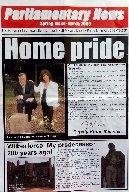
'Home Pride' PrescottA politician's private life should remain their private life. But when they seek to utilise their home life for political benefit then the media have a right to expose hypocrisy.

In Hull a Labour leaflet has gone out showing John and Pauline Prescott together under the heading "Home Pride":

Labour councillor Phil Webster said a copy dropped through his letterbox, alongside the election leaflet of his colleague Peter Clark, who is standing for election in the Ings ward next week.
He said: "My exact words were unprintable - I think it's an ill-timed leaflet and I think a lot of people will say 'hypocritical' and bin it."
Once again Prescott tries to both have his cake and eat it. Let's remind ourselves of John Prescott's speech from a decade ago:

The two faces of John Prescott
They are up to their necks in sleaze. The best slogan he could think up for their conference next week is Life's better under the Tories. Sounds to me like one of Steven Norris's chat up lines. Can you believe that this lot is in charge? Not for long, eh? Then after 17 years of this Tory government, they have the audacity to talk about morality. Did you hear John Major on the Today programme? - calling for ethics to come back into the political debate? I'm told some Tory MPs think ethics is a county near Middlesex. It's a bit hard to take: John Major - ethics man. The Tories have redefined unemployment they have redefined poverty. Now they want to redefine morality. For too many Tories, morality means not getting caught. Morality is measured in more than just money. It's about right and wrong. We are a party of principle. We will earn the trust of the British people. We've had enough lies. Enough sleaze.

Friday, April 28, 2006

So who's running Labour's election campaign?

David Miliband has said "Over the next week our priority is to make sure people do think local," as part of an attempt to focus the local elections on local issues. Has he not seen either of the two Labour Party Election Broadcasts?

If Labour wants to the local elections to be focused on local issues, why don't they run their campaign on them?

Sunday, April 02, 2006

Pots calling kettles black

Iain Dale draws attention to Sutton Liberal Democrats accusing Labour of dirty tricks. Given the Liberal Democrats' own record on local campaigning this is a case of pots calling kettles black.

This time round Labour in Sutton (which isn't much, Labour has never been particularly strong in that part of London) have set up the website http://www.suttonlibdems.org.uk/ which lists the Liberal Democrats record running Sutton Borough Council:

Eleven things to remember before you vote!

Mismanagement of Sutton Council has cost every Council Tax Payer £30 this year – this is almost exactly the rise in Council Tax that they claim to be needed to maintain services.

The Council are refusing to guarantee that they will not cut household waste collection to fortnightly after the election.

For the last two years the Council has tried to steal money from our kids by cutting funding of Sutton’s Education Services – the only reason they have backed down this year is because of the local elections.

The Council has cut the annual skip service so our streets are now subject to highest ever levels of fly-tipping.

The Council’s priority in dealing with graffiti is to keep council offices such as the Civic Centre free of graffiti – they don’t care about local residents.

The Council is encouraging more hard-to-get-to out-of-town shopping facilities turning our high streets into ghost towns.

Year on year the Council has cut funding for the elderly and disabled – like all bullies they pick on the weakest members of our society.

The Council keeps trying to sell off its remaining council stock to private landlords against the wishes of the tenants.

The Council do not want St Helier Hospital rebuilt at its current location – instead they want its services moved to South Sutton and Epsom.

The council is refusing to expand the Neighbourhood Warden scheme to protect the residents of Sutton.

The council is refusing to expand the Neighbourhood Forum system because they really don’t want to have to listen to your views.
As ever the Liberal Democrats take offence to people pointing out their records and policies that they're not so proud of.

Incidentally Sutton Labour has done a better job of setting up this website than their own - http://www.suttonborolabour.org.uk/ has the header "London Borough of Sutton Labour Party", but the contents display the legend:
The page cannot be displayed
The page you are looking for is currently unavailable. The Web site might be experiencing technical difficulties, or you may need to adjust your browser settings.
The real alternative to Liberal Democrat run Sutton Borough Council can be found at Sutton & Cheam Conservatives and Carshalton & Wallington Conservatives.

Saturday, March 25, 2006

An inability to get the figures right or just whatever will benefit?

Whilst doing a search to see which candidate for the Liberal Democrat Deputy Leadership election has the misfortune to be backed by Lembit Öpik I came across a couple of pages that indicates that perhaps Öpik and his local party either can't make their minds up or can't count properly.

First, from this BBC News story, Öpik stated at the time of Charles Kennedy's fall:
They've got what they wanted and we lose the most successful party leader we've had for 83 years...
And yet the Lib Dems only had 62 MPs at that point, when there were 72 Liberal MPs elected in 1931.

Now traditionally the excuse is made that in 1931 the Liberals were split in three and that only those following Sir Herbert Samuel were the "official Liberals". Any other MPs with "Liberal" in their description would be ignored, including Clement Davies, then MP for what is now Öpik's seat. But a scan of the Montgomeryshire Liberal Democrats website shows that this line of reasoning is not followed by Öpik and his local party when they triumphantly proclaim:
The area has been represented by a Liberal/Liberal Democrat MP for over a hundred years except for a four-year period (1979-83).
...
Clement Davies (1929-1962)
So Davies was considered a Liberal throughout his political career. Therefore the National Liberals could be counted as Liberals, and presumably also the four members of Lloyd George's family who decided to sit the National Government out completely from this point, meaning that in 1931 there were more than 62 Liberal MPs elected - 72 in total (and proportionally even more in a smaller House of Commons). And 1931 was only 75 years ago, not 83!

So are the Lib Dems unable to count or are they selective about which parts of their history they will and will not acknowledge? Or will they just say whatever will benefit them at the time?

Wednesday, June 22, 2005

Liberal Democrats call for proportional representation... again!

Charles Kennedy attacked the electoral system in Parliament today, showing that the Liberal Democrats always retreat to their self-interest whenever they get the chance. The BBC also reported rumours that Liberal Democrat members of the House of Lords are planning to break the "Salisbury Convention" - the longstanding agreement that the House of Lords will not block proposals that were in the manifesto of the party that won the general election.

It's not heard to see that these two points are clearly linked. Many have made a lot of the fact that at the last general election the Labour Party only won 35.2% of the vote (there's a slightly higher figure, but only using figures for Great Britain) and also of the fact that in England alone the Conservatives received more votes than Labour.

Neither of these is a novel situation. In the last 100 years ago the emergent government did not have the largest share of the vote in both 1910 elections, 1923, 1929, 1951 or February 1974. In most general elections no party or formal coalition has won over 50% of the votes cast. Figures for individual parts of the UK are harder to comeby, but in 1964-1966 and again in 1974-1979 Scottish MPs made the difference at Westminster. When the West Lothian Question was first coined amidst the 1970s proposals for devolution it was no academic theory but a very real possibility.

But that was on the basis of MPs at Westminster, not votes cast in the ballot box. Currently the way our political system works it is reliant on receiving the support of a majority in the Commons and the total numbers of votes cast across the country do not play a direct role in that. It is very easy to throw some figures together and claim that the majority of the country has voted against a particular policy, but very few people ever seem to produce some number crunching that creats a majority for any package of proposals. Under proportional representation, with the series of hung parliaments that are likely to ensue (and the almost perpetual holding of the balance of power by the Liberal Democrats - no wonder they're so keen for it) there would be many, many policies that would fail the very test that the PR lobby uses to discredit the current system.

The disparity on England is another fluke of the system. It is forgotten that Labour MPs tend to get elected with fewer votes than Conservative MPs, for a variety of reasons (including the continuing decline of the number of voters in inner cities, rotten turnouts in the same constituencies and traditional Labour voters in rock solid safe seats being so disillusioned with Not So New Labour that they decline to turn out and vote for it). Redistribution should reduce the problem, though even then there will be anomalies due to the way the rules work (in London in particular the Boundary Commission rules on not tying together any more than two boroughs means that parts of the capital will have more MPs than on a strict overall allocation). But also it's a built in safeguard against any one part of the country becoming too dominant. A parliament needs to represent the nation as a whole and a system that requires multiple individual victories is one way to do it. The comparison is with many sports where one side can score more goals/runs/points but still lose overall - yet no-one seems to object to such a state of affairs.

And the Liberal Democrat proposals for PR contain some holes as well. They advocate the Single Transferable Vote. But it's telling that they propose a few exemptions for this. In the Highlands and Islands of Scotland they would retain single member constituencies. Currently most of the Highlands and Islands have Liberal Democrat MPs, including Charles Kennedy himself.

STV would also carry a lot of technical problems in allocating. The idea of constituencies with five or six MPs could be hard to implement on the ground. One example is my home county of Surrey.

Surrey has eleven local government districts. They are generally of equal size, and the current Westminster constituencies are all based on them, but with sufficient variations that make carving them up for even single member constituencies tricky. Trying to cut the county up into a five and a six member constituency would be a nightmare.

Basing the seats on the local government districts is a natural starting point, and breaching the boundaries of any would stir up a hornets nest, especially as on the numbers it isn't really necessary. (In theory STV would not require many boundary changes, but rather a change in the number of MPs each seat is allocated.)

Starting out is fairly straightforward. Because three of the districts in the east stretch from the London border to the Sussex border, whilst a fourth is completely contained within them, it's clear that one seat has to have as its nucleus Tandridge, Reigate & Banstead, Epsom & Ewell and Mole Valley. But after this things get complicated. Either one or two districts will have to be added. The only possible additions are Waverley, Waverley & Guildford, Elmbridge or Elmbridge and Spelthorne.

Adding Waverley and Guildford would result in a severe numerical imbalance in the county since Guilford especially has more than 1/11th of the electorate in the country. Furthermore it would detach Guildford from many of the north west districts that it has strong ties to. Adding just Waverley makes sense on the numbers game, but results in a seat that stretches from Farnham to Oxted, detaching a lot of the links between rural parts of Waverley and Guildford. (Indeed the village of Bramley has fought very hard to avoid being transferred from the Guildford constituency to South West Surrey in the current boundary review. The prospect of a greater detachment would severe many links in the area.) The alternative route could only feasibly go as far as Elmbridge - Spelthorne's connections are mainly with other districts, particularly Runnymede. Even then many of the ties would be weak and the seat would be undersized, again repeating the numerical imbalance. And this is just one county.

Another problem area would be Northern Ireland. The current legislation recommends the province has seventeen seats, though the Boundary Commission presently recommends eighteen as the only way to prevent a major restructuring of the province's electoral geography. But either way it becomes difficult to cut the province up into five or six member constituencies. The west of the province (the three counties of Londonderry, Tyrone and Fermanagh, or the nine districts of Fermanagh, Dungannon & South Tyrone, Cookstown, Omagh, Strabane, Magherafelt, Derry, Limavady and Coleraine) in the west make a natural unit for a five member constituency, but in the east the districts are not well spaced - Belfast City requires three MPs (the present four seats encorporate a lot of the suburbs). But then the rest of County Antrim (districts Moyle, Ballymoney, Ballymena, Larne, Carrickfergus, Antrim, Newtownabbey and Lisburn) requires four. Counties Armagh and Down (districts North Down, Ards, Castlereagh, Down, Banbridge, Newry & Mourne, Craigavon and Armagh) require five. Alternatively it would be natural to attach Belfast City to surrounding suburban districts such as Castlereagh, Lisburn, Newtonabbey and (perhaps) North Down - but this would leave the rump of County Antrim as a detached block of three MPs and Counties Armagh and Down would also be left floating. Trying to compensate by cutting up the west just doesn't work and in no way is a "natural" arrangement.

(Of course if the political process in Northern Ireland ever gets anywhere or the government ever decides to get on with thinks we could finally see the very long awaited review of local government in the province that will severely reduce the number of districts. How this will affect a notional set of STV constituencies is unclear at the moment.)

There is a lot in principle to recommend STV as a system for Westminster elections. But it falls down both on the difficulty of producing viable constituencies and also because it fails on some of the very points that current campaigners for proportional representation are making against the present system. All electoral systems have their deficits, but to make a sudden change to a system that doesn't seem to answer many of the problems and just generates some new ones is not the answer.

LinkWithin

Related Posts Plugin for WordPress, Blogger...