Thursday, March 23, 2006

School uniforms

A random search of other Blogspot bloggers shows that most agree with the House of Lords verdict that a school could exclude a pupil for refusing to wear uniform in favour of a jilbab. However some of the comments brought up are a little disturbing to say the least.

At the most basic level this seems like another case of the courts once more upholding the necessary powers of schools in difficult matters. But it is hard not to notice the wider problems this case has brought up.

Schools are traditionally not bastions of democracy, liberty and individualism. Orders are passed down from upon high, the pupils have little say in where they are and what they do (and there are punishments called "detention" - I wonder how long it will be before someone tries to get a writ of habeus corpus!) and dissent is looked down upon in favour of uniformity. School uniforms are one of the most visible means by which all pupils can be put on the same level, undermining superiority complexes and helping to break down social and cultural barriers between pupils. But for it to be able to do this schools need control over their uniform policies. From this perspective the outcome of the case should be clearly in favour of the school.

But then we are faced with the question of the right of people to wear religious dress. The Law Lords however covered this in their ruling:

Article Nine [of the Human Rights Convention] does not require that one should be allowed to manifest one's religion at any time and place of one's own choosing. Common civility also has a place in the religious life." Lord Hoffmann said.
The pupil in question, Shabina Begun, had been at the school for two years and had not expressed dissent from the school's uniform policy:
Lady Hale pointed out that the school had respected cultural and religious diversity by allowing girls to wear a skirt, trousers, or the shalwar kameez, with or without a headscarf. This was a "thoughtful and proportionate response", as shown by the fact that girls were worried that they would come under pressure to wear the jilbab if it had been permitted.
Described variously as a triumph of common sense by Miriam's ideas or more bluntly Shabina Begum gets told off by the Lords by Narcissistic views on News/Politics, the case has won support from bloggers across the globe. GayandRight has even asked Could you imagine a ruling like this in Canada??? It's hard at a glance to see any bloggers supporting Shabina's appeal on an initial search.

Any school uniform policy needs to strike a balance. It needs to be acceptable to most pupils and supported by their families, achieve the purposes and not prove a source of disruption. The school in question had gone to great lengths to have a policy that commanded support across the Muslim community and which is accepted by the vast majority of pupils - indeed as pointed out some find the policy to be protective. In such circumstances, what as the school to do? As Muslim WakeUp! puts it:
Shabina’s school did not prevent her from wearing a headscarf. Unlike French schools which have banned the hijab outright, Shabina’s school went out of its way to accommodate the needs of students who are nearly 80 percent Muslim, speak 40 different languages and who are from 21 different ethnic groups.

Students could wear the regular uniform or they could wear a shalwar kameez, which consists of loose-fitting trousers and a long tunic. They could wear a headscarf as long as it conformed to certain criteria. In order to satisfy the needs of the diverse background of its students, the school consulted with pupils, parents, schools and leading Muslim organizations when it was formulating its uniform policy.

And yet this was not enough for Shabina who wore the shalwar kameez from the time she enrolled at the school when she was 12 until September 2002 when she suddenly decided to wear the jilbab, a long loose fitting one-piece item that covers the body from head to ankles.

Her school refused to allow her to attend until she resumed wearing the approved uniform. Shabina took the school to court but her case was rejected by High Court judges last summer. The school had argued that allowing her to wear a jilbab would impact on the rights of other Muslim girl pupils who opposed allowing the jilbab as they felt that it would create a hierarchy of belief at the school.

Her school was right. What has become of our faith that it has turned into a competition over who can cover the most? Who convinces young Muslim women that they must cover more and more, going far beyond what is deemed the modest clothing that Islam requires of men and women?
To non-Muslims the details of the debate within Islam about what clothing is required can be difficult to fathom. The school clearly did everything reasonable to seek a broad consensus which did not meet an outcry until two years after Shabina had started at the school. It would have been unworkable to rip up the carefully researched and agreed existing uniform policy for the sake of a single pupil. Philosophically the case raises the difficult question of how far tolerance can run. Schools do not have the luxury of an ideal philosophical situation. They have to operate effectively.

As for Shabina, she has now switched schools and so is able to receive her education. And is this the last we have heard of her? Seb's Blag doesn't think so:
So, Shabina lost her case, but what will history's verdict be? Is she a Muslim extremist, when all's said and done, at least in terms of her beliefs? I don't think so. Misled, possibly; naive, probably; young, definitely. Most importantly though, I'd say she's a Brit with true grit. And I won't be surprised if we see a lot more of her in future.
But will we see more furore over uniform in schools? Only time will tell. But I hope that this country reaches a solution that is far more workable and tolerant than France's ideological ban on the hijab.

Wednesday, March 22, 2006

Labour - a party for all the country?

An interesting proposal has cropped up on the Wikipedia Talk page for "Labour Party (UK)" about whether that is an accurate name for the article.

Why on earth is this article called 'Labour Party (UK)'? My complaint is that the Labour Party is not a United Kingdom party, but rather a British party, which has always kept itself out of Ireland. I would advocate a move to Labour Party (Great Britain).
For a long time Labour's refusal to allow residents of Northern Ireland to join the party was one of their most absurd features, especially when residents in every other part of the world could. Even now the decision by the central committee of the party to bar local organisation and campaigning flies in the face of claims to be "a party for the entire country". (It also makes a complete mockery of the Labour website URL http://www.labour.org.uk)

Furthermore it does little to help the "normalisation" of the politics of the province that Tony Blair and Peter Hain often speak of. Attempts by the Conservatives to establish themselves in the province haven't been the most successful, in part due to the absence of a left option to make right-left politics a possibility, but the central party has not shut down the Northern Ireland branch. The Liberal Democrats allow an organisation that has decided to not stand in favour of the Alliance. Why doesn't Labour trust its members in Northern Ireland to organise and take a decision for themselves on whether or not to stand?

As for the Wikipedia page location, my own comments are:
Whilst I personally agree that Labour is not a party for the entire country (and the URL labour.org.uk is misleading), ultimately Labour is a party that seeks (and sometimes obtains) power to govern the United Kingdom in its own right. Several other parties across the world similarly do not organise across the entire country, but relabelling them would get more confusing.

Oh and Labour hasn't always kept out of Ireland - one of the earliest conferences in the 1900s was held in Belfast.

Tuesday, March 21, 2006

Not another two years!

Charles Clarke has announced that Tony Blair will stay Prime Minister for another two years, stepping down in 2008. This is despite ever stronger calls for Blair to resign sooner - an opinion poll shows half of voters want him gone by the end of the year if not sooner, his authority has slipped over "cash for Peerages" and the education bill, calls to quit from across the Labour Party ranging from Labour's most senior elder statesman to one of the most prominent rising stars of tomorrow and other calls from across the spectrum.

Once upon a time, when Blair was the future (it was that long ago), he was seen as a politician who was thought to be able to give the nation what it needs. He has failed. He has one last chance to give the nation what it wants - and that is to resign now.

Sunday, March 19, 2006

Yet another (deputy) leadership election

Iain Dale comments on the story that Harriet Harman will run to be Deputy Leader under Old Man Brown. Like Iain I initially laughed.

But on reflection Harman is being stripped of key ministerial responsibilities, prone to making silly gaffes, has hit the headlines for her driving activities, can generate fierce political storms and is considered by some to be ignorant.

Would she really be such an unthinkable choice to step into John Prescott's shoes?

The moral politics test

I've just seen this test on The Right Way.

So what does this test say about me:

Your Score

Your scored 1.5 on the Moral Order axis and -1.5 on the Moral Rules axis.

Matches

The following items best match your score:

System: Conservatism
Variation: Moderate Conservatism
Ideologies: Capital Republicanism
US Parties: Republican Party
Presidents: Gerald Ford (90.62%)
2004 Election Candidates: John Kerry (79.99%), George W. Bush (78.12%), Ralph Nader (65.06%)

Statistics

Of the 169569 people who took the test:
0.7% had the same score as you.
46.3% were above you on the chart.
46.6% were below you on the chart.
22.5% were to your right on the chart.
71.8% were to your left on the chart.

Take the test at Moral Politics.

So just what do Deputy Leaders actually do?

It has now emerged that John Prescott was not informed about the controversial loans. He wasn't the only one - the Labour Party treasurer was also in the dark.

One has to wonder why Prescott was out of the loop on such a crucial issue. Just what purpose does the Deputy Leader of a political party serve?

Could it be David Heath after all?

A few more bloggers are either supporting David Heath or predicting his victory. Hot ginger and dynamite describes him as:
A great performer in the Commons, seemingly well liked by his colleagues and with an unusually good handle on massively important and largely ignored issues, like the tortured death of legal aid in Britain.
Meanwhile The Apollo Project notes that the odds on Heath are good, for those who've got in the habit of casting political bets. So could this not widely known man become the Liberal Democrats' Number 2? Or will Lembit Öpik endorse him?

Saturday, March 18, 2006

Howard's Way out

Michael Howard has announced he will be stepping down as an MP at the end of this Parliament. A pity - he will only be 69. In the US Strom Thurmond was still in the Senate when he turned 100!

Guy Fawkes has a good tribute to Howard and there will be others.

I remember the week Howard became leader quite well. The party had been wandering aimlessly, with Iain Duncan Smith being increasingly embattled and no-one could see a way forward. Then IDS fell and many worried that yet another leadership election would just lead to more wrangling and uncertainty.

Instead Howard rapidly established his claims as the candidate who could unite the party and take it forward. After years of despair the Conservative Party finally went on the front foot, taking the fight to Not So Very New Labour. It speaks volumes that Labour were forced to resort to their worn out tactic of getting the party name wrong and claiming the leader was an extreme right winger, rather than offering coherent counter arguments.

Howard did not win the last general election, it is ture, but he made the first advance in seat terms since the mid 1980s. And his final months at leader saw a brilliant strategy of seeing off attempts to force an immediate leadership election and giving the party time to reflect and discuss the way forward. The main legacy of Howard's leadership is the rise of David Cameron. It is a pity will not be in the Commons to watch Cameron from the government backbenches.

But he has made a few mistakes. Why on earth does he support Liverpool?!

So who will succeed Ming?

He's barely been in the job two weeks but already there are blogs discussing who will succeed Ming Campbell. And Charles Kennedy thought he had it bad!

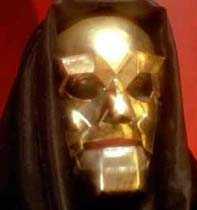
The Deputy Leader of the Liberal DemocratsNaturally the Deputy Leadership race is attracting a bit of speculation as to how it will influence the eventual leadership succession, though it has to be said that none of the three candidates look like natural choices. Ming's Dynasty: The Battle For The Succession is predicting that Vincent Cable will be "Imperial Regent". But I think he's got the terms mixed up - shouldn't it be Klytus?

Pressed out?

Whilst randomly scanning several other blogs I've come across this interesting post about newspaper readership & circulations on A Liberal Goes A Long Way.

For the uninitiated the "circulation" for a newspaper is the number of copies sold each day, whilst the "readership" is the number of people actually reading the paper. The National Readership Survey calculates the latter on the basis of a mass survey and is the basis used for selling advertising space so there is a strong vote of confidence in it as an accurate measure from one of the most important quarters. (The NRS website refers to "Great Britain" - I am not sure if it covers Northern Ireland. However that distinction is currently rather more relevant to advertisers than political influences.)

The readership figures for the daily and Sunday papers are as follows (percentage comparisons are with last year):

Dailies:

The Sun = 8,140,000 (-8%)
Daily Mail = 5,640,000 (-2%)
Mirror = 4,150,000 (-11%)
Daily Telegraph = 2,160,000 (-1%)
Daily Express = 1,980,000 (-7%)
The Times = 1,810,000 (+9%)
Daily Star = 1,780,000 (-9%)
The Guardian = 1,220,000 (+14%)
The Independent = 705,000 (+10%)
Financial Times = 391,000 (-10%)

Sundays:

News of the World = 8,630,000 (-9%)
Mail on Sunday = 6,310,000 (=)
Sunday Mirror = 4,570,000 (-6%)
Sunday Times = 3,550,000 (+9%)
Sunday Express = 2,230,000 (+1%)
Sunday Telegraph = 2,040,000 (=)
People = 1,980,000 (-11%)
Observer = 1,290,000 (+11%)
Star = 1,020,000 (-16%)
Independent on Sunday = 788,000 (+18%)
Several points immediately stand out. First off is the decline of the Mirror. There was a time when was talking tough about readership being on the up and aiming to challenge The Sun for the top slot. Instead it has declined drastically and is now lagging well behind the Daily Mail.

The Daily Express should frankly be ashamed of itself and I wouldn't be surprised if Lord Beaverbrook is turning in his grave. When doing research for my thesis I have seen many copies of the Express from the late 1930s when it routinely trumpeted its latest increases in sales, at one stage breaking the world record for sales almost every month. Now it is lagging far behind those glory days.

The Independent, Times and Guardian have all substantially increased their sales - is this a continued effect of the "compact" format? And if so, can the Telegraph hold out? (And what will happen to all the readers who despise the compact format?)

(On the issue of the compact format, I have to wonder if it isn't driven more by newsprint costs rather than the often cited problem that commuters find it difficult to fold the paper on the train. When I commuted to school nearly three-quarters of the carriage read a broadsheet each day and it wasn't hard to master the trick of folding the page in half to slide round.)

But it's the message about party support and influence that stands out the most from these figures. ALGALW's analysis has it best:
...while it's debatable whether newspapers' endorsements of political parties in reality has much effect... it’s interesting to tot up the numbers.

The Labour Party was supported by five daily newspapers at the 2005 general election (Sun, Mirror, Times, Guardian and FT), with a combined readership of 15,711,000 (56% of total readership). The Tories could count on just three (Mail, Telegraph and Express), with readerships of 9,780,000 (35%).

Rather quirkily, the Star and Independent have this much in common: both declined to endorse any one party (one out of utter disinterest, the other out of split loyalties). The Sundays, far less influential, were slightly more even (51% to 44%), owing to the Sunday Times's tepid support for the Tories.

But these figures illustrate how important is Rupert Murdoch – whose 75th birthday it was last week-end – to Gordon Brown and David Cameron. (I suspect Ming Campbell has probably written off the chances of gaining this senior citizen’s vote.) The 56:35 split in daily newspaper readership figures in favour of Labour could easily be reversed if Mr Murdoch were to decide the Sun (and Times) should switch sides next time, and back the Tories.
I'm not sure many newspaper readers vote on the basis of editorial endorsements and newspaper circulation drives generally focus on matters other than their political stance. But the media can still write up or write down individuals and parties. Over the next three or four years several of these papers can have a big impact. Constant headlines and major stories about achievements of one party and/or the failures of another do have an impact on shifting public opinion. As has been shown by the Tessa Jowell affair the media often plays a strong role in sustaining a story and keeping it in the public eye.

But the other big point is the general decline in readership. Daily sales have dropped from thirteen to twelve million in the last three years. At the same time digital television has expanded, online newssites are getting even better and larges parts of the public are receiving their news from ever more diverse sources. One has to wonder whether Murdoch really does have the power so many have long attributed to him.

LinkWithin

Related Posts Plugin for WordPress, Blogger...