Showing posts with label coalitions. Show all posts

Sunday, January 23, 2011

Lessons from Ireland

The news from Ireland over the last few days has been astounding to watch. Something tremendous is happening and the current chaos is a run up to it. But there are also some interesting comparisons that stand out.

For those unfamiliar with Irish politics, the main governing party is Fianna Fáil - The Republican Party, but don't ask me what it believes in or stands for. Or them for that matter. Despite this Fianna Fáil is one of the most successful parties in the democratic world, having topped the poll in every single Irish general election since 1927.

This once mighty successful party is now polling at 8%. (Irish Independent: Cowen bails out as FF hit 8pc low) The forthcoming general election could be one of those super crashes that permanently alters the landscape of a country's politics not just for the parliament ahead but for decades to come.

Until today Fianna Fáil had a coalition partner, the Green Party. It's the first time the Greens have been in government and they've not had the best of times, with the party suffering internal divides, miserable poll ratings and atrocious local election results. More than a few British Liberal Democrats will be looking at the Irish Greens and wondering if they will suffer the same fate.

In the run up to the election Ireland has, however, shown a few things that may in the UK will want to take on board:
  • It is possible for a failing government to get rid of the prime minister even when the election is very close. UK Labour please take note.
  • Governments can collapse before the full life of a parliament, so fixed term parliaments aren't such a great idea.
  • Parties of purist idealists like the Greens aren't always cut out for the necessary prioritising and compromising of government.
I several doubt the UK's Green parties will be rushing to use their Irish sister party's record in government as a selling point in the near future. But Fianna Fáil also has a sister party in the UK, albeit a sibling that would rather run away from comparisons.

This is because Fianna Fáil is a party without an overall ideology, which swings in the wind between the left, centre and right, which jumps onto whatever vote-winning bandwagon is going, which is full of "local campaigner" elected representatives and which when in government usually lets it coalition partners set the overall direction. Sound familiar?

And of course Fianna Fáil is affiliated to the European Liberal Democrats and in the European Parliament it sits in the Alliance of Liberals and Democrats for Europe grouping.

Naturally many Liberal Democrats will be rushing to distance themselves from the comparisons, or inventing reasons why a member of the European liberal family doesn't qualify as a member of the European liberal family. But the key points of comparison are there regardless.

Sunday, August 22, 2010

The Australian AV deadlock

Australia has one of the strongest two party systems in the world. So it's amazing that yesterday's election has produced a hung parliament and potential deadlock that makes our election outcome look simple by comparison.

Hung parliaments are historically rare in Australia. I can think of only six previous ones - the 1901, 1903 & 1906 elections when the party system was still in flux with three sizeable groups (Free Traders, Protectionists and Labor), the 1922 and 1934 elections when the Coalition between the Nationalists/United Australia Party and Country Party (now the Nationals) wasn't operating but it was soon assembled afterwards, and 1940 when the Coalition and Labor were neck & neck, with two independents holding the balance of power. The two independents supported the Coalition for a year, but then when Robert Menzies was deposed as Prime Minister the independents deserted and Labor took office without an election. The 1901-1910 period also saw a lot of parliamentary musical chairs as three parties vie for an outcome.

This time round the situation could be very messy. Firstly a note on the results figures floating around - these are provisional. Australia counts by the polling station and the formal declaration usually doesn't come for a couple of weeks. In the meantime most results are clear enough but a few knife-edge seats could tip either way, not least because postal votes can still arrive for the next two weeks. (The Australian: Count continuing and state swings notes how in 2007 the initial projection and final outcome varied.)

The second key point is that contrary to the way a lot of the national figures have been presented, one of the Nationals MPs is not going to be part of the conservative Coalition. The Nationals in Western Australia take a different approach from their eastern counterparts and operate as an independent third force focused on the needs of regional Australia. They are willing to work with Labor if it will help their constituents (and their counterparts in South Australia have already done so) and want the federal party to do the same. And if Tony Crook (who ironically defeated the only sitting MP with a criminal conviction) can't get that then he will probably be another independent force.

So the current provisional seat count is as follows:

Labor 72
Liberal/National Coalition 72
Independents 4
Greens 1
WA Nationals 1

Three of the Independents are ex Nationals & sitting MPs re-elected - see Third parties & independents under AV - the Australian experience for more details. The fourth independent is an ex Green candidate and anti-war protester who has won the urban seat of Denison.

So the balance of power rests with a disparate "Gang of Six" on the crossbenches and these six will not all work together as one block. There's also no real clarity over which of the two main parties have at least a plurality - they're equal in seats and the "Two-Party-Preferred" vote is very close and will take to finalise. So there isn't even anything to guide the six towards which party has a stronger democratic basis to form the next government. And whilst the three ex National Independents have publicly announced they will have discussions amongst themselves about what to do, they're giving slightly different signals about their intentions. And of course even if they do work as a block of three they can't deliver a majority in & of themselves. If the WA National joins them then they could at least offer a two vote majority but of the other two floaters the Green says he will support Labor and the the ex-Green independent would probably do the same, though he also wants a redress of the way federal funding goes in his state.

Advocates of hung parliaments and coalitions are fond of claiming that hung parliaments are good for countries because they produce compromises. But I don't think Australia is going to have that in pursuit of a majority. Instead it's likely that whichever party forms a government will do so by pumping extra federal spending into the various crossbenchers' constituencies. It's a great advert for hung parliaments isn't it?

Monday, May 17, 2010

Conservatives in coalitions

I previously looked at how the Liberals have fared in past coalitions, but what of the Conservatives? Well the answer is that the Conservatives didn't suffer any long term damaging splits, but did find themselves in governments that not everyone was terribly happy with particularly the right (or "die-hard") wing of the party.

The first major coalition was that of the Conservatives and Liberal Unionists, a group of Liberals who broke away over Gladstone's proposals for Home Rule for Ireland. Although the first appointment of a Liberal Unionist as a minister was at the start of 1887, it was not until 1895 that a ministry fully combining the two was formed. The Unionists governed for ten years and increasingly became a single entity. When they split over proposals for tariff reform there were Conservatives and Liberal Unionists on both sides of the divide. Eventually in 1912 the parties formally merged, long after they had practically done so already.

The next was formed during the First World War when Herbert Asquith formed a multi-party administration in response to criticism of the conduct of the war. The Conservatives did rather badly out of the distribution of offices - there were Liberals as Prime Minister, Chancellor, Home Secretary, Foreign Secretary, Minister of Munitions and more. The Conservative leader was given the Colonial Office and his leading lieutenant the India Office. The one significant office held by a Conservative was the Admiralty. It was not exactly the best share of offices (and not just for the Conservatives - the Labour leader got Education!) and it contributed to the unhappiness that lingered throughout the remainder of Asquith's premiership.

Eighteen months later Asquith's failure to vigorously prosecute the war led to his being forced out by a high level rebellion, and David Lloyd George took his place. Lloyd George's government had a very different spread of ministers and this time round the Conservatives received most of the top posts. The government led the UK to victory and many Conservatives were willing to continue the coalition after the war, riding the coattails of Lloyd George's popularity.

However the peacetime coalition found itself riven with infighting, both between its separate parties and within them. The cartoonist David Low famously represented the coalition as an ass with two separate heads, often at odds with one another. It was a caricature not far off the truth but perhaps the legs should have been given an independence of their own. The government struggled with the problems of post war reconstruction, and did have some successes such as over Irish independence (to the ire of hardline Conservatives), but found it difficult to balance demands for action with demands to scale back public expenditure, especially with huge "anti-waste" campaigns waged both in the media and at by-elections. The right of the Conservative Party agitated more and more for an end to the coalition. Eventually at a famous meeting at the Carlton Club in October 1922 Conservative MPs voted to leave the coalition, even though it meant repudiating their own leader, Austen Chamberlain. Former leader Andrew Bonar Law was persuaded to return to the leadership and become Prime Minister of an independent Conservative government even though he was not in the best of health. Chamberlain and most of the other leading coalition Conservatives were temporarily cast into the political wilderness, but within a couple of years the party was reunified under Law's successor, Stanley Baldwin. There was no substantial breakaway alternative Conservative party that competed at the polls.
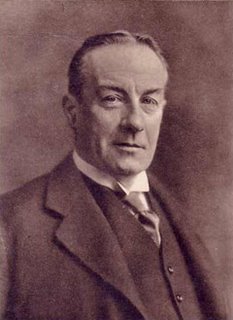
Stanley BaldwinBaldwin claimed to dislike coalitions, but the events of 1931 propelled him into another. Perhaps the situation was eased by Lloyd George being ill at the time and thus unable to take part. But what began as an emergency National Government to balance the budget and restore confidence in the currency soon became a permanent entity, holding power until the Second World War. Curiously the government was led for the first four years by Ramsay MacDonald despite his National Labour party having only 13 MPs compared to the Conservatives' 473. But then such an arrangement suited Baldwin. More significantly the National Government proved very willing to take on the die-hard wing of the Conservatives over Indian Home Rule. Over four years the government passed the Government of India Act 1935 despite fierce opposition from the likes of Winston Churchill. The National Government allowed first Baldwin and then Neville Chamberlain to govern more from a more moderately position than a single party Conservative government would have done so. The right of the Conservative party found its influence limited but it had little alternative option than to acquiesce.

The National Government eventually fell in 1940 in the circumstances described in my previous post The Norway Debate. Churchill formed an all party coalition which fought the war until breaking up after the defeat of Germany. For the most part this was the end of coalitionism until this month. But there were two possible additions.

The first was the "caretaker" government Churchill formed in May 1945, combining the Conservatives, Liberal Nationals and various non-party ministers who had been recruited during the war. This government lasted only two months but had the notable success of introducing child allowances. Being composed of nominally multiple parties it was still a coalition, even if the Conservatives and Liberal Nationals would start a formal amalgamation in opposition in 1948. As with the Unionist coalition of an earlier generation the National Government coalition proved the means by which the Conservatives ultimately absorbed a large chunk of the Liberal party.

The other was Churchill's 1951-1955 government. Whilst supported exclusively by the Conservative party it was broader than a single party administration. A number of the wartime "non-party" ministers was once more appointed and there was even an offer to Clement Davies, the leader of the Liberal Party. It may have been a coalition, it may have been a personalist government but it was certainly not a party government.

The Conservative record from coalitions is thus mixed. On the one hand they have been the means by which the party has absorbed recruits from the left and broadened its political base. They have also suffered no significant electoral breakaways or disasters simply from being in a coalition. On the other hand the governments produced have usually been significantly different from the single party Conservative orthodoxy of the relevant generation and key sections of the party have found themselves isolated. Is the pattern being repeated now?

Tuesday, May 11, 2010

Still waiting

...but then this is not unusual in any form of negotiations. You can't produce a plan for government on the back of a beer mat and these things do take time. Unfortunately taking time is something alien to the UK's political culture where we've become used to instant results.

Glancing around the internet, particularly Twitter, I can see grassroots members in all parties advocating all outcomes, with a few threatening to leave their party if it doesn't take their advice. I'm not going to do the latter but I'll throw my preferred outcome on the pile - a Conservative-Liberal Democrat coalition which holds a referendum on the Single Transferable Vote. I don't believe the outcome of such a referendum is at all certain (though I think it can be won for First Past The Post given then right campaign) but one way or another it would settle the election system debate for a generation.

A Conservative-Liberal Democrat coalition would have a firm majority in parliament, able to implement necessary decisions. It would be able to implement many areas of common interest. It wouldn't be comfortable for many members in either political party, but often members of governing parties find the conditions of the day require their parties to do things they would ideally rather not do.

Such an arrangement would be inherently more stable than a minority Conservative government, even if the latter had the support of the Democratic Unionist Party. A minority government would always be at risk of the opposition parties all combining and voting it out. It could offer no medium term guarantees. It would not be the best option for the country. A Conservative-Liberal Democrat coalition it must be.

Sunday, May 09, 2010

Time for a coalition?

I'll be honest - I have always been deeply sceptical about the viability of coalition government in the UK. I also don't think any coalition can claim to have been voted for by the people. People may say "52.0% voted for a 'progressive' coalition" or "59.1% voted for a libertarian coalition" or all manner of combinations, but the fact is that none of these coalitions were actually offered to the voters. It is false to conscript votes to one option or another.

That said I am also deeply worried about the news from the financial markets. It's a scary time and the country desperately needs a stable government that can take decisions. If getting that involves compromise then so be it. Governments have to compromise all the time with interests both at home and abroad.

I don't think the country's voting system should be simply changed for the sake of this. But that isn't actually what the Liberal Democrats want. They want a referendum on changing the voting system. But the outcome of such a referendum isn't a foregone conclusion. It could instead endorse the current system - British Columbia recently had two referendums on changing the provincial legislature's voting system from First Past The Post to Single Transferable Vote. The first had a majority but failed at the threshold, the second saw much greater information campaigns and rejected it outright. Don't take the opinion polls as indicative either way.

But right now the most important thing is the economy. All parties have to make the current situation work. And if we are to have a voting system that makes hung parliaments more regular outcomes then lets see the advocates of that voting system make those outcomes work.

If I hear that a Conservative-Liberal Democrat coalition has been agreed, it won't be the end of the world. At the moment it's the best option available.

Sunday, January 25, 2009

Will a coalition happen in Canada... or here?

On Tuesday the Canadian Parliament sits again, for the first time since the dramatic events at the beginning of December (When was this put to the electorate?, Has Canadian democracy triumphed? and Harper 1, Dion Nil ). In the weeks since then the Canadian Liberals have gone and done one of our Liberal Democrats' favourite things - decapitating their own leader. New leader Michael Ignatieff seems to be desperately searching for a way to get out of the proposed coalition with the New Democratic [sic] Party and the separatist Bloc Québécois - see Ottawa Citizen: Parliament vs. The People. It looks like for now Canadian democracy has triumphed, to the credit of Stephen Harper and the Conservatives.

But could such a situation happen in the UK? Just imagine if the next general election returns a hung parliament, as many have been speculating. And then if the Conservatives are the largest party but Labour forms a coalition deal with the Liberal Democrats and the Scottish and Welsh separatists (the way things are going in Northern Ireland it's doubtful there'll be any Nationalist MPs actually taking seats in the Commons), thus giving a strong say in the running of the country to those who want to tear it up. The big point of contention may be over what the parties say in the general election. If some or all of the parties give pledges against a coalition they could not credibly claim a mandate.

And if particular parties campaign against each other it will be especially galling. If the Liberal Democrats campaign to take a Labour seat on the basis that "a vote for the Conservatives is a vote for Labour" (supported by a dodgy barchart) they will be betraying voters if they turn round and put Labour in government anyway. When pressed on the question of what the party will do in a hung parliament the Liberal Democrats are frequently evasive, either talking about vague general goals or saying they won't answer the question until the voting system is changed. If they want voters to trust them, they should try giving a clear answer for the entire country for once. But that would be totally alien to the party's nature.

LinkWithin

Related Posts Plugin for WordPress, Blogger...