Showing posts with label Winston Churchill. Show all posts
Showing posts with label Winston Churchill. Show all posts
Friday, June 04, 2010
The Prime Minister addressing the Coalition
Just a quick post to highlight a gem from the YouTube archives - Winston Churchill addressing Coalition ministers in 1941:


Monday, May 17, 2010
Conservatives in coalitions
I previously looked at how the Liberals have fared in past coalitions, but what of the Conservatives? Well the answer is that the Conservatives didn't suffer any long term damaging splits, but did find themselves in governments that not everyone was terribly happy with particularly the right (or "die-hard") wing of the party.
The first major coalition was that of the Conservatives and Liberal Unionists, a group of Liberals who broke away over Gladstone's proposals for Home Rule for Ireland. Although the first appointment of a Liberal Unionist as a minister was at the start of 1887, it was not until 1895 that a ministry fully combining the two was formed. The Unionists governed for ten years and increasingly became a single entity. When they split over proposals for tariff reform there were Conservatives and Liberal Unionists on both sides of the divide. Eventually in 1912 the parties formally merged, long after they had practically done so already.
The next was formed during the First World War when Herbert Asquith formed a multi-party administration in response to criticism of the conduct of the war. The Conservatives did rather badly out of the distribution of offices - there were Liberals as Prime Minister, Chancellor, Home Secretary, Foreign Secretary, Minister of Munitions and more. The Conservative leader was given the Colonial Office and his leading lieutenant the India Office. The one significant office held by a Conservative was the Admiralty. It was not exactly the best share of offices (and not just for the Conservatives - the Labour leader got Education!) and it contributed to the unhappiness that lingered throughout the remainder of Asquith's premiership.
 Eighteen months later Asquith's failure to vigorously prosecute the war led to his being forced out by a high level rebellion, and David Lloyd George took his place. Lloyd George's government had a very different spread of ministers and this time round the Conservatives received most of the top posts. The government led the UK to victory and many Conservatives were willing to continue the coalition after the war, riding the coattails of Lloyd George's popularity.
 However the peacetime coalition found itself riven with infighting, both between its separate parties and within them. The cartoonist David Low famously represented the coalition as an ass with two separate heads, often at odds with one another. It was a caricature not far off the truth but perhaps the legs should have been given an independence of their own. The government struggled with the problems of post war reconstruction, and did have some successes such as over Irish independence (to the ire of hardline Conservatives), but found it difficult to balance demands for action with demands to scale back public expenditure, especially with huge "anti-waste" campaigns waged both in the media and at by-elections. The right of the Conservative Party agitated more and more for an end to the coalition. Eventually at a famous meeting at the Carlton Club in October 1922 Conservative MPs voted to leave the coalition, even though it meant repudiating their own leader, Austen Chamberlain. Former leader Andrew Bonar Law was persuaded to return to the leadership and become Prime Minister of an independent Conservative government even though he was not in the best of health. Chamberlain and most of the other leading coalition Conservatives were temporarily cast into the political wilderness, but within a couple of years the party was reunified under Law's successor, Stanley Baldwin. There was no substantial breakaway alternative Conservative party that competed at the polls.
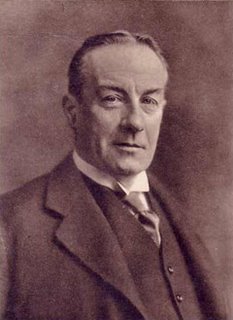 Baldwin claimed to dislike coalitions, but the events of 1931 propelled him into another. Perhaps the situation was eased by Lloyd George being ill at the time and thus unable to take part. But what began as an emergency National Government to balance the budget and restore confidence in the currency soon became a permanent entity, holding power until the Second World War. Curiously the government was led for the first four years by Ramsay MacDonald despite his National Labour party having only 13 MPs compared to the Conservatives' 473. But then such an arrangement suited Baldwin. More significantly the National Government proved very willing to take on the die-hard wing of the Conservatives over Indian Home Rule. Over four years the government passed the Government of India Act 1935 despite fierce opposition from the likes of Winston Churchill. The National Government allowed first Baldwin and then Neville Chamberlain to govern more from a more moderately position than a single party Conservative government would have done so. The right of the Conservative party found its influence limited but it had little alternative option than to acquiesce.
The National Government eventually fell in 1940 in the circumstances described in my previous post The Norway Debate. Churchill formed an all party coalition which fought the war until breaking up after the defeat of Germany. For the most part this was the end of coalitionism until this month. But there were two possible additions.
The first was the "caretaker" government Churchill formed in May 1945, combining the Conservatives, Liberal Nationals and various non-party ministers who had been recruited during the war. This government lasted only two months but had the notable success of introducing child allowances. Being composed of nominally multiple parties it was still a coalition, even if the Conservatives and Liberal Nationals would start a formal amalgamation in opposition in 1948. As with the Unionist coalition of an earlier generation the National Government coalition proved the means by which the Conservatives ultimately absorbed a large chunk of the Liberal party.
The other was Churchill's 1951-1955 government. Whilst supported exclusively by the Conservative party it was broader than a single party administration. A number of the wartime "non-party" ministers was once more appointed and there was even an offer to Clement Davies, the leader of the Liberal Party. It may have been a coalition, it may have been a personalist government but it was certainly not a party government.
The Conservative record from coalitions is thus mixed. On the one hand they have been the means by which the party has absorbed recruits from the left and broadened its political base. They have also suffered no significant electoral breakaways or disasters simply from being in a coalition. On the other hand the governments produced have usually been significantly different from the single party Conservative orthodoxy of the relevant generation and key sections of the party have found themselves isolated. Is the pattern being repeated now?
The first major coalition was that of the Conservatives and Liberal Unionists, a group of Liberals who broke away over Gladstone's proposals for Home Rule for Ireland. Although the first appointment of a Liberal Unionist as a minister was at the start of 1887, it was not until 1895 that a ministry fully combining the two was formed. The Unionists governed for ten years and increasingly became a single entity. When they split over proposals for tariff reform there were Conservatives and Liberal Unionists on both sides of the divide. Eventually in 1912 the parties formally merged, long after they had practically done so already.
The next was formed during the First World War when Herbert Asquith formed a multi-party administration in response to criticism of the conduct of the war. The Conservatives did rather badly out of the distribution of offices - there were Liberals as Prime Minister, Chancellor, Home Secretary, Foreign Secretary, Minister of Munitions and more. The Conservative leader was given the Colonial Office and his leading lieutenant the India Office. The one significant office held by a Conservative was the Admiralty. It was not exactly the best share of offices (and not just for the Conservatives - the Labour leader got Education!) and it contributed to the unhappiness that lingered throughout the remainder of Asquith's premiership.


 Baldwin claimed to dislike coalitions, but the events of 1931 propelled him into another. Perhaps the situation was eased by Lloyd George being ill at the time and thus unable to take part. But what began as an emergency National Government to balance the budget and restore confidence in the currency soon became a permanent entity, holding power until the Second World War. Curiously the government was led for the first four years by Ramsay MacDonald despite his National Labour party having only 13 MPs compared to the Conservatives' 473. But then such an arrangement suited Baldwin. More significantly the National Government proved very willing to take on the die-hard wing of the Conservatives over Indian Home Rule. Over four years the government passed the Government of India Act 1935 despite fierce opposition from the likes of Winston Churchill. The National Government allowed first Baldwin and then Neville Chamberlain to govern more from a more moderately position than a single party Conservative government would have done so. The right of the Conservative party found its influence limited but it had little alternative option than to acquiesce.
The National Government eventually fell in 1940 in the circumstances described in my previous post The Norway Debate. Churchill formed an all party coalition which fought the war until breaking up after the defeat of Germany. For the most part this was the end of coalitionism until this month. But there were two possible additions.
The first was the "caretaker" government Churchill formed in May 1945, combining the Conservatives, Liberal Nationals and various non-party ministers who had been recruited during the war. This government lasted only two months but had the notable success of introducing child allowances. Being composed of nominally multiple parties it was still a coalition, even if the Conservatives and Liberal Nationals would start a formal amalgamation in opposition in 1948. As with the Unionist coalition of an earlier generation the National Government coalition proved the means by which the Conservatives ultimately absorbed a large chunk of the Liberal party.
The other was Churchill's 1951-1955 government. Whilst supported exclusively by the Conservative party it was broader than a single party administration. A number of the wartime "non-party" ministers was once more appointed and there was even an offer to Clement Davies, the leader of the Liberal Party. It may have been a coalition, it may have been a personalist government but it was certainly not a party government.
The Conservative record from coalitions is thus mixed. On the one hand they have been the means by which the party has absorbed recruits from the left and broadened its political base. They have also suffered no significant electoral breakaways or disasters simply from being in a coalition. On the other hand the governments produced have usually been significantly different from the single party Conservative orthodoxy of the relevant generation and key sections of the party have found themselves isolated. Is the pattern being repeated now?
Monday, May 10, 2010
70 years ago today: The end of Chamberlain, the coming of Churchill
May 10 1940 was a major day in the Second World War. It was the day when Germany began the western offensive, invading the low countries. But it was also a major day in the United Kingdom. It was on this day that Neville Chamberlain resigned, to be succeeded by Winston Churchill.
After the rebellion in the Norway Debate two days earlier, Neville Chamberlain had sought to respond to demands to widen his government to regain support. He had offered the Labour Party leaders, Clement Attlee and Arthur Greenwood, posts in the government but they felt unable to make an acceptance on their own. Instead they went to their party conference which happened to meeting in Bournemouth at the time, and put two questions to it:
The Labour National Executive Committee met on May 10 and considered the two questions. They decided "No" to the first and "Yes" to the second. The message was phoned through to London from a public telephone box - how subtle and unpretentious, much like Attlee himself. When Attlee and Greenwood returned to London they learned that Churchill had been appointed Prime Minister and he offered them seats in the War Cabinet.
Not entirely coincidentally, the Wikipedia article on Neville Chamberlain is today's "featured article". A few years ago I contributed quite a bit to it, providing the basic structure though it has since been expanded and enhanced greatly thanks to three recent biographies.
After the rebellion in the Norway Debate two days earlier, Neville Chamberlain had sought to respond to demands to widen his government to regain support. He had offered the Labour Party leaders, Clement Attlee and Arthur Greenwood, posts in the government but they felt unable to make an acceptance on their own. Instead they went to their party conference which happened to meeting in Bournemouth at the time, and put two questions to it:
- Would the Labour Party serve in a government under Neville Chamberlain?
- Would they serve in a government under someone else?
The Labour National Executive Committee met on May 10 and considered the two questions. They decided "No" to the first and "Yes" to the second. The message was phoned through to London from a public telephone box - how subtle and unpretentious, much like Attlee himself. When Attlee and Greenwood returned to London they learned that Churchill had been appointed Prime Minister and he offered them seats in the War Cabinet.
Not entirely coincidentally, the Wikipedia article on Neville Chamberlain is today's "featured article". A few years ago I contributed quite a bit to it, providing the basic structure though it has since been expanded and enhanced greatly thanks to three recent biographies.
Friday, May 07, 2010
The Norway Debate
(This post was written in advance because of everything else that's currently going on.)
Seventy years ago today began what is undoubtedly the most famous parliamentary debate of the twentieth century - the so-called Norway Debate. (Technically the debate was on the motion "That this House do now adjourn" and the title in Hansard is "Conduct of the War" but "the Norway Debate" is the title everyone remembers.)
 Over two days the House of Commons engaged in a debate that began on the details of the recent failures of the Norway campaign but soon became a more general forum for discussing and attacking the way the way the war was being fought. Many a famous quote comes from that time, but the most famous of all was that of Leo Amery (right). Amery had a reputation as an incredibly boring speaker, perhaps on a par with Geoffrey Howe, so many MPs were undoubtedly relieved when his speech clashed with dinner. But like Howe fifty years later, Amery rose to the occasion, climaxing with these words:
There were many other dramatic moments that day, ranging from Portsmouth North MP Admiral of the Fleet Sir Roger Keyes making a speech in full uniform, with six rows of medals, to David Lloyd George making his final great speech in the House where he said to Churchill:
 What is little known is that Lloyd George was seemingly inspired by a cartoon printed that day in the Daily Express likening the debate to that very scenario.
At the end of the debate a division was forced and no less than thirty-nine MPs voted against their own government. After a series of political manoeuvrings over the next two days Neville Chamberlain resigned as Prime Minister, to be succeeded by Winston Churchill.
Something I've not seen in easy circulation is the full list of government rebels so here it is:
Conservatives – 33
Liberal Nationals – 4
National Labour – 2
(The numbers of rebels varies accross sources, mainly because many writers have repeated contemporary errors. But this is the full list of rebels.)
For those who want to read the whole debate this is now possible thanks to Hansard 1803-2005:
There was also a shorter, and far less well-known, debate in the House of Lords on the same subject on May 8 1940.
Seventy years ago today began what is undoubtedly the most famous parliamentary debate of the twentieth century - the so-called Norway Debate. (Technically the debate was on the motion "That this House do now adjourn" and the title in Hansard is "Conduct of the War" but "the Norway Debate" is the title everyone remembers.)

I have quoted certain words of Oliver Cromwell. I will quote certain other words. I do it with great reluctance, because I am speaking of those who are old friends and associates of mine, but they are words which, I think, are applicable to the present situation. This is what Cromwell said to the Long Parliament when he thought it was no longer fit to conduct the affairs of the nation: "You have sat too long here for any good you have been doing. Depart, I say, and let us have done with you. In the name of God, go."(The full speech in Hansard.)
There were many other dramatic moments that day, ranging from Portsmouth North MP Admiral of the Fleet Sir Roger Keyes making a speech in full uniform, with six rows of medals, to David Lloyd George making his final great speech in the House where he said to Churchill:
The right hon. Gentleman must not allow himself to be converted into an air-raid shelter to keep the splinters from hitting his colleagues.(The full speech in Hansard.)

At the end of the debate a division was forced and no less than thirty-nine MPs voted against their own government. After a series of political manoeuvrings over the next two days Neville Chamberlain resigned as Prime Minister, to be succeeded by Winston Churchill.
Something I've not seen in easy circulation is the full list of government rebels so here it is:
Conservatives – 33
- Leo Amery – Birmingham, Sparkbrook
- William Anstruther-Gray – Lanarkshire, Northern
- Nancy Astor – Plymouth, Sutton
- Robert Boothby – Aberdeenshire and Kincardineshire, Eastern
- Robert Bower – Yorkshire (North Riding), Cleveland
- Henry Burton – Suffolk (West), Sudbury
- Duff Cooper – Westminster, St George's
- Somerset de Chair – Norfolk, South-Western
- Herbert Duggan – Middlesex, Acton
- Paul Emrys-Evans – Derbyshire, Southern
- Ralph Glyn – Berkshire, Abingdon
- Derrick Gunston – Gloucestershire, Thornbury
- Samuel Hammersley – Willesden, East
- Quintin Hogg – Oxford
- Edward Herbert Keeling – Middlesex, Twickenham
- Hamilton William Kerr – Oldham
- Roger Keyes – Portsmouth, North
- Richard Law – Kingston-upon-Hull, South-West
- Harold Macmillan – Stockton-on-Tees
- John Macnamara – Essex, Chelmsford
- Hugh Molson – Derbyshire, High Peak
- Godfrey Nicholson – Surrey, Farnham
- Colin Patrick – Devon, Tavistock
- John Profumo – Northamptonshire, Kettering
- Stuart Russell – Lancashire, Darwen
- Edward Louis Spears – Carlisle
- Mavis Tate – Somerset, Frome
- Charles Taylor – Sussex (East), Eastbourne
- Ronald Tree – Leicestershire, Harborough
- Earl Winterton – Sussex (West), Horsham and Worthing
- Roy Wise – Smethwick
- Viscount Wolmer – Hampshire, Aldershot
- John Allan Cecil Wright – Birmingham, Erdington
Liberal Nationals – 4
- Herbert Walter Butcher – Lincolnshire and Rutlandshire, Holland-with-Boston
- James Henderson Stewart – Fife, Eastern
- Leslie Hore-Belisha – Plymouth, Devonport
- Frank Medlicott – Norfolk, Eastern
National Labour – 2
- Stephen King-Hall – Lancashire, Ormskirk
- Harold Nicolson – Leicester, West
(The numbers of rebels varies accross sources, mainly because many writers have repeated contemporary errors. But this is the full list of rebels.)
For those who want to read the whole debate this is now possible thanks to Hansard 1803-2005:
There was also a shorter, and far less well-known, debate in the House of Lords on the same subject on May 8 1940.
Sunday, December 20, 2009
Gordon Brown and his old cheques
I missed the story earlier this week that when Gordon Brown was a student his rent cheque once bounced. (Daily Telegraph: Gordon Brown's £3 rent cheque bounced at university halls of residence) Frankly this sort of thing has happened to many of us, particularly if (as in the case of Brown) you have more than one account and get muddled between them. I've had a few problems over the years when I've had direct debits and standing orders going out of the wrong account, taking them into the red or even bouncing.
Quite a few commentators are trying to seize on this as saying something about Brown's handling of the economy - e.g. the Telegraph byline "Gordon Brown has repeatedly declared that he is the man to lead Britain out of its financial crisis" or this blogpost Tory Outcast: Gordon Brown's financial incompetence spans 4 decades. But they're missing a key point in a hope to get a cheap dig. A lot of Chancellors and Prime Ministers have not treated their own finances with the most rigorous care. Amongst the more famous cases, Pitt the Younger left huge debts when he died whilst Norman Lamont was embarrassed by revelations about his credit card bill. Winston Churchill engaged in some highly creative personal accounting (as set out by Roy Jenkins) and Asquith was also careless. And this was all when they were in office. Compared to all this, a student once drawing a cheque on the wrong account is meaningless and no proof whatsoever of any incompetence on Brown's part.
(And there's plenty of real proof anyway.)
Quite a few commentators are trying to seize on this as saying something about Brown's handling of the economy - e.g. the Telegraph byline "Gordon Brown has repeatedly declared that he is the man to lead Britain out of its financial crisis" or this blogpost Tory Outcast: Gordon Brown's financial incompetence spans 4 decades. But they're missing a key point in a hope to get a cheap dig. A lot of Chancellors and Prime Ministers have not treated their own finances with the most rigorous care. Amongst the more famous cases, Pitt the Younger left huge debts when he died whilst Norman Lamont was embarrassed by revelations about his credit card bill. Winston Churchill engaged in some highly creative personal accounting (as set out by Roy Jenkins) and Asquith was also careless. And this was all when they were in office. Compared to all this, a student once drawing a cheque on the wrong account is meaningless and no proof whatsoever of any incompetence on Brown's part.
(And there's plenty of real proof anyway.)
Friday, November 28, 2008
The arrest of Damian Green
Like many others I'm absolutely stunned by the news of the arrest of Damian Green. (BBC News: Senior Tory [sic] arrested over leaks) So he's had information leaked to him that is sensitive of a political nature not a security one.
Many have flooded the blogosphere and airwaves to point out that the leaking of information by civil servants and its use by politicians is routine - Churchill's contacts in the 1930s are amongst the most famous. I don't want to get into the hyperbole - this is not Zimbabwe and Gordon Brown is not Robert Mugabe (or Stalin), no matter how hysterical the accusations are made in the heat of the moment.
But what is worrying is the way government ministers are denying they had any foreknowledge of a politically sensitive move, especially as it the Mayor of London (or technically in his role the chair of the Metropolitan Police Authority) was informed. As we have recently seen the political control of the Metropolitan Police is multiple but I cannot believe the Home Secretary knew nothing about this.
We must await further information but this whole thing strikes me as a cock-up of enormous proportions.
Many have flooded the blogosphere and airwaves to point out that the leaking of information by civil servants and its use by politicians is routine - Churchill's contacts in the 1930s are amongst the most famous. I don't want to get into the hyperbole - this is not Zimbabwe and Gordon Brown is not Robert Mugabe (or Stalin), no matter how hysterical the accusations are made in the heat of the moment.
But what is worrying is the way government ministers are denying they had any foreknowledge of a politically sensitive move, especially as it the Mayor of London (or technically in his role the chair of the Metropolitan Police Authority) was informed. As we have recently seen the political control of the Metropolitan Police is multiple but I cannot believe the Home Secretary knew nothing about this.
We must await further information but this whole thing strikes me as a cock-up of enormous proportions.
Subscribe to:
Posts (Atom)
LinkWithin
